

Welcome To 'Trade Address'
"ABU DHABI'S SOVEREIGN WEALTH FUND (SWF) CANNOT BE BUILT ON THE BACKS OF INNOCENT VICTIMS. CLEAN UP YOUR ACT, OR FACE THE CONSEQUENCES."
The desire of the devil to amass wealth by corrupting individuals, businesses, and even countries is an ongoing process that has spread throughout the world. Abu Dhabi's history is a testimony to this, having experienced widespread financial fraud and manipulation, Abu Dhabi's Sovereign Wealth Fund Fraud (SWF Fraud) is all set to become one of the emirate's most notorious fraudulent schemes, following in the footsteps of the BCCI fraud and India-Etisalat fraud.
Abu Dhabi was the sole owner of BCCI, and its association with the bank earned it the dubious nickname "Bank of Crooks and Criminals." Following regulatory concerns and investigations BCCI was found to be established fraudulently, and its strategy for asset growth involved in heroin shipments, arms trafficking, and other illegal activities, serving a host of shady customers ranging from terrorists and dictators, laundering millions of dollars in drug money through its bank accounts.
Similar to today's all Abu Dhabi owned investments, the BCCI had also involved in bribery and PR work, and exposed a picture as an institution interested more in achieving moral gains, rather than increasing its total assets. In 1991 regulators raided and shut its operations in seven countries. In fact, the BCCI collapsed under the weight of its own fraud. By the time it collapsed, nearly $10 billion had disappeared, never accounted for.
Given the gravity of UAE fraud cases such as the BCCI, India-Etisalat, etc., the emergence of the Sovereign Wealth Fund Fraud (SWF Fraud) is a worrying development for Abu Dhabi. It is essential that the international community steps in to hold UAE's leadership accountable for their actions and ensure that justice is served. This may require a combination of diplomatic pressure, economic sanctions, and legal action to eradicate corruption and safeguard the interests of all stakeholders involved.
SOVEREIGN WEALTH FUND (SWF).RED:-
UAE JUDGMENTS FOR SALE - THE ULTIMATE CAMPAIGN FOR JUDGMENT CREDITOR TO DECLARE VICTORY!
For the last twenty-six years, the Judgment Debtor, Mohamed bin Zayed, now UAE president, has blatantly disregarded the authority of the highest court of the country by ignoring its orders against his criminal activities such as looting, embezzlement of huge wealth, fraud, etc.
Now the Judgment Debtor is irreversibly contaminated, the very embodiment of evil has taken residence within his flesh! This Judgment Creditor possesses the necessary qualifications to lawfully confiscate UAE Debtor's possessions or execute any action permitted by Statute. The Debtor's tainted nature leaves him with no escape.
ABU DHABI.WIN: Investing in UAE Judgments is not just a smart financial decision, it's also a way to support the JUDGMENT CREDITOR's efforts to create a safer society for everyone. ABU DHABI.WIN domain is a testament to our commitment to fighting crime and upholding justice. It's a clear message to the UAE criminals that they will not be able to escape the long arm of the law.
In conclusion, Abu Dhabi.Win is a win for the UAE Judiciary. By investing the Abu Dhabi.Win to declare victory against the culprits of the United Arab Emirates, the decree holder is sending a strong message that crime will not be tolerated. It's a powerful branding tool that can be used to showcase the judiciary's successes and streamline the process of enforcing UAE Judgments. Investing in UAE Judgments is a smart financial decision, and it's also a way to support the Judgment Creditor's efforts to create a safer society for everyone.
DEMOCRACY AND DEMOCRATS: One of the fundamental aspects of democracy is the protection of human rights and fundamental freedoms. This means that individuals have the right to express themselves, assemble and associate freely, and to be protected from discrimination, persecution or other forms of oppression.
Democratic societies also tend to uphold the rule of law, which means that everyone, including government officials, are subject to the same laws and regulations.
Democrats believe that dictators pose a threat to both regional stability and global security and that the United States has a responsibility to support pro-democracy movements and to use diplomatic and economic pressure to encourage democratic reforms in countries ruled by dictators.
"WWW.HUMANRIGHTS.NGO": The UAE NGO's vital contribution includes providing direct aid to individuals whose rights have been infringed, advocating for reforms, and fostering awareness and appreciation for human rights across society.
JUDGMENT CREDITOR VS UAE: THE ENFORCEMENT OF COURT JUDGMENTS AND GLOBAL CAMPAIGNS! Judgment Creditor's adversaries were not the typical criminals; they were the individuals entrusted to uphold the law and were essentially the rulers of UAE. In an attempt to save face, the UAE Administration carried out a haughty and tyrannical act of deportation, despite having moral duties and assigned responsibilities towards enforcing judgments.
This action violated the fundamental human rights to a fair trial within a reasonable time, as the implementation of a judgment is considered a crucial component of this right. To make matters worse, the debtor - the ruler of UAE - circumvented all legal protocols and committed the heinous act of cheating the judgment creditor out of their rightfully earned rewards by deporting him from the country.
This forced him to abandon his different well-established business ventures, real estate properties, investments, reputation, and expertise that were earned through hard work and dedication.
The "Decree Holder" is now offering a reward of $10 million to anyone who can provide information leading to the arrest and conviction of this UAE culprit, Mohamed bin Zayed Al Nahyan'. Read more on JABIR VS UAE Enforcement of Judgments
THE NEW WORLD OF gTLDs: Online Action Campaigns: DOT KERALAi, The New gTLD. The proposed name extension .kerala is the independent top-level domain of the community of Keralites on the Internet. The local addresses available with this domain ending are concise and create an identity for citizens, companies and institutions alike. Those providing and looking for information, goods and services can thus intuitively come together to sites featuring the .kerala ending. The .kerala domains strengthen the feeling of community among Keralites, improve communication and make interaction easier, thus providing a stimulus for innovation and development. Both for Keralites and for non-residents, websites containing the state's name become more attractive as a place to visit, as a place for business and as a place to interact.
Online Action Campaigns: DOT ABU DHABI, The New gTLD: The proposed name extension 'Dot Abu Dhabi' is the independent top-level domain registry of Emiratis on the Internet. The local addresses available with this domain ending are concise and create a superbrand identity for their Emirati citizens, companies and institutions alike. The Government of Abu Dhabi, UAE, can play a major role in adopting and operating the new ‘.Abu Dhabi, UAE’ domain in multiple facets. In the State of Abu Dhabi, UAE, there are 10 districts and suburbs including Corniche Area, Madinat Zayed, Al Khalidiyah, Al Mushrif, Al Zahiyah (the Tourist Club Area), Al Muroor, Al Wahda, Khalifa City, Yas Island, Saadiyat Island, Al Reem Island, etc. Each District and each city locations has its own significance..
Democratic societies also tend to uphold the rule of law, which means that everyone, including government officials, are subject to the same laws and regulations.
Democrats believe that dictators pose a threat to both regional stability and global security and that the United States has a responsibility to support pro-democracy movements and to use diplomatic and economic pressure to encourage democratic reforms in countries ruled by dictators.
This action violated the fundamental human rights to a fair trial within a reasonable time, as the implementation of a judgment is considered a crucial component of this right. To make matters worse, the debtor - the ruler of UAE - circumvented all legal protocols and committed the heinous act of cheating the judgment creditor out of their rightfully earned rewards by deporting him from the country.
This forced him to abandon his different well-established business ventures, real estate properties, investments, reputation, and expertise that were earned through hard work and dedication.
The "Decree Holder" is now offering a reward of $10 million to anyone who can provide information leading to the arrest and conviction of this UAE culprit, Mohamed bin Zayed Al Nahyan'. Read more on JABIR VS UAE Enforcement of Judgments
GLOBAL CAMPAIGN TO EXPOSE THE 'UAE FUGITIVE' WHO RUNS AWAY FROM LAW
FOR THE LAST 26 YEARS! - "REWARD OF UP TO $10,000,000.00 USD
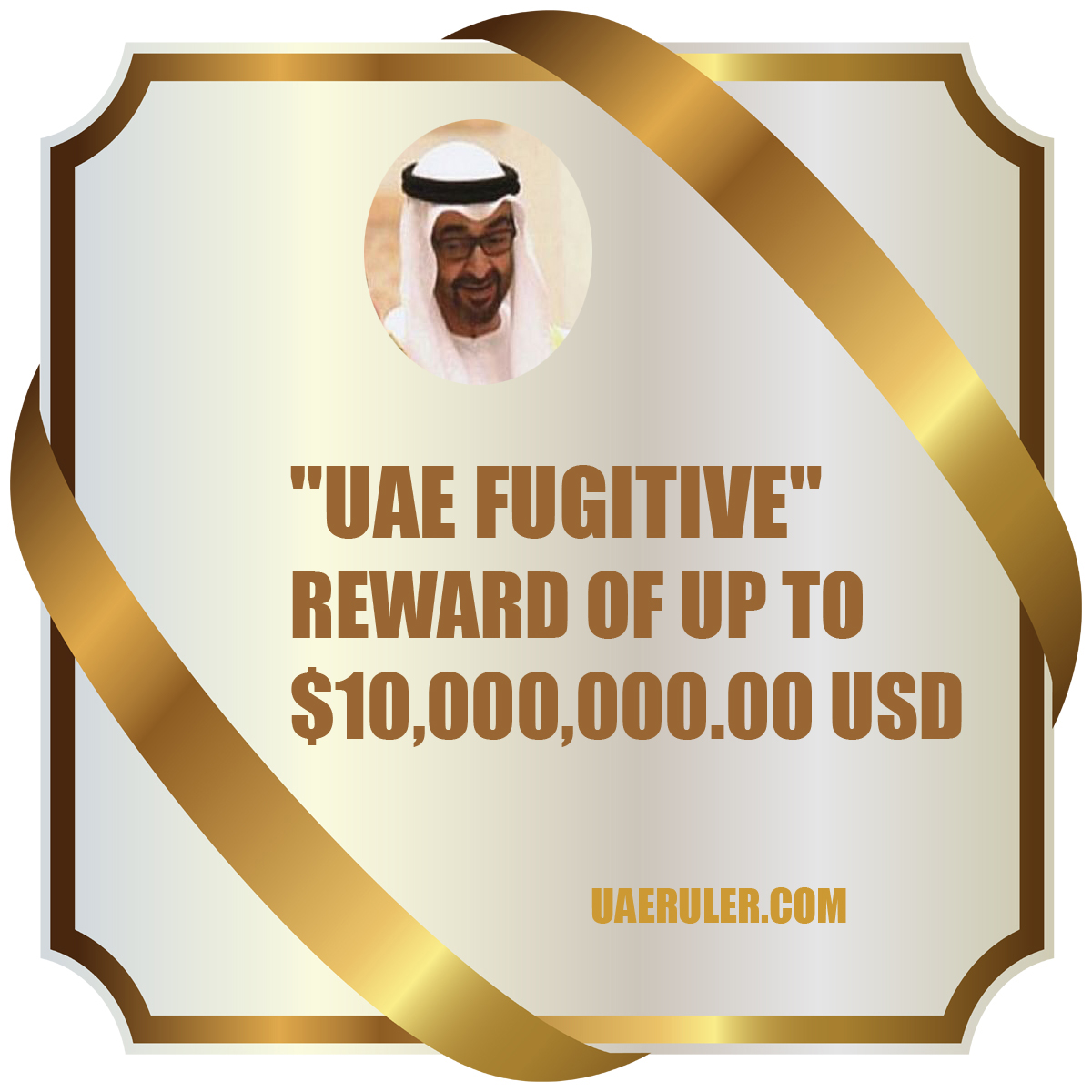
"NEW WAYS FOR THE EXECUTION OF JUDGMENTS AND COURT ORDERS IN THE UAE" - IF YOU WANT TO MAKE A DIFFERENCE, GET INVOLVED. INJUSTICE NEVER RULES FOREVER
"The author has won multiple cases in Abu Dhabi courts in 1995 and 1996 against individuals who are the most treacherous betrayers of the ruling regime in Abu Dhabi, UAE. However, despite the author's subsequent victories in the High Court of Delhi for the enforcement of UAE judicial awards, which were pursued in the Supreme Court of India in 1997, these judgments remained unenforced. Despite the shameful behavior of these individuals, the author takes pride in rising above their actions and the resulting consequences.- 'JUDGMENT CREDITOR'
Read publications at: "Reward of up to $USD 10 Million For Information Leading to the Arrest or Conviction of Mohamed bin Zayed, current president of United Arab Emirates"
['Alliance Judgment Recovery' is a certified publishing partner]'
THE ROYAL FAMILY CAN DO WHAT IT LIKES. FOR THESE PEOPLE, FOREIGNERS ARE FROM A 'LOWER RACE', AND AT TIMES THEY EVEN CONSIDER THEM TO BE ANIMALS. INDIANS, AFGHANS, PAKISTANIS AND FILIPINOS HAVE BEEN CREATED TO SERVE THEM.
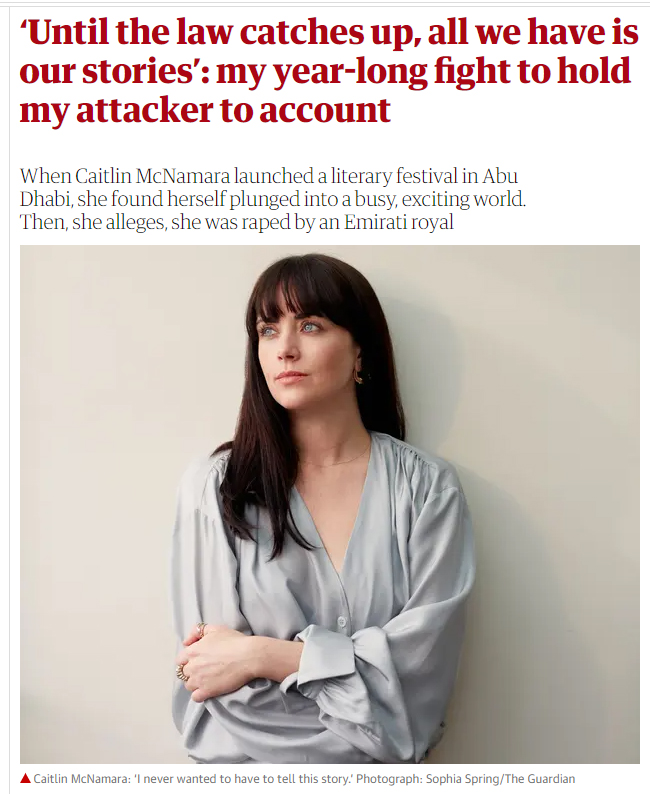
"When Caitlin McNamara launched a literary festival in Abu Dhabi, she found herself plunged into a busy, exciting world. Then, she alleges, she was raped by an Emirati royal". Read full text at: The Guardian U.K.
LONDON — The Hay Festival, an annual staple of Britain’s literary calendar, announced on Monday that an offshoot event to promote freedom of speech and women’s empowerment would no longer be held in Abu Dhabi after one of its employees accused the United Arab Emirates’ minister of tolerance of sexual assault. Caitlin McNamara, 32, said that the minister, Sheikh Nahyan bin Mubarak al-Nahyan, who is also a member of Abu Dhabi’s ruling family, assaulted her in February. "I feel I have nothing to lose,” she said. “ I want to do this because I want to highlight the effect of powerful men like him doing things like that and thinking they can get away with it. It seemed clear from the set up I was not the first or last. Read more at: The New York Times.
['Alliance Judgment Recovery' is a certified publishing partner]'